

Buying guide
How to choose a cookie jar: material, size and lid
Glass, ceramic, tin or acrylic, a half gallon or two and a half, a lid that seals or one that rests. What each choice gets you on a real kitchen counter.
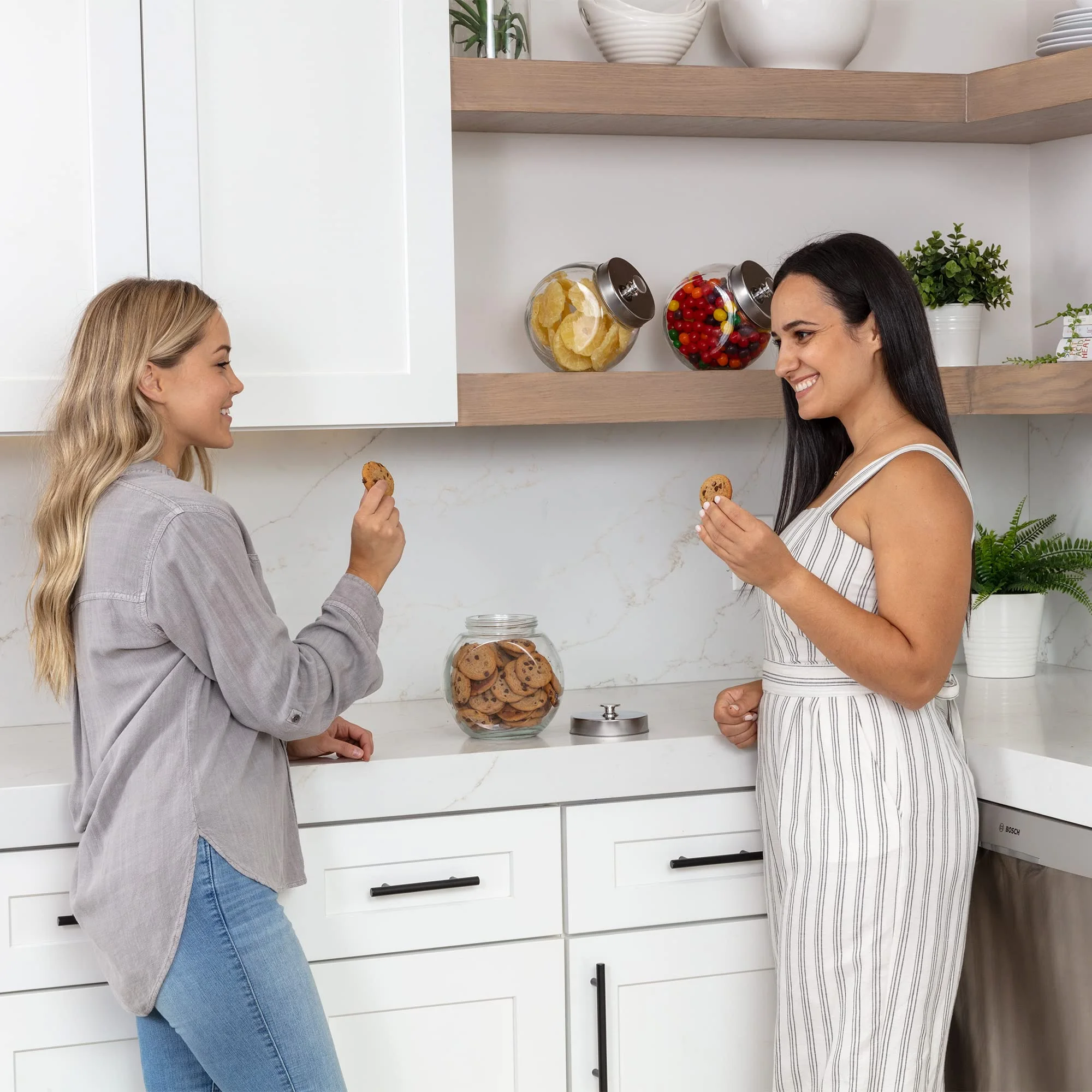
A cookie jar is bought once and stands on the counter for years, so it is worth five minutes of thinking before the click. Three questions decide almost everything: what the jar is made of, how much it holds, and how the lid closes. A fourth, how it looks, you will answer without our help.
Glass: you see what is left
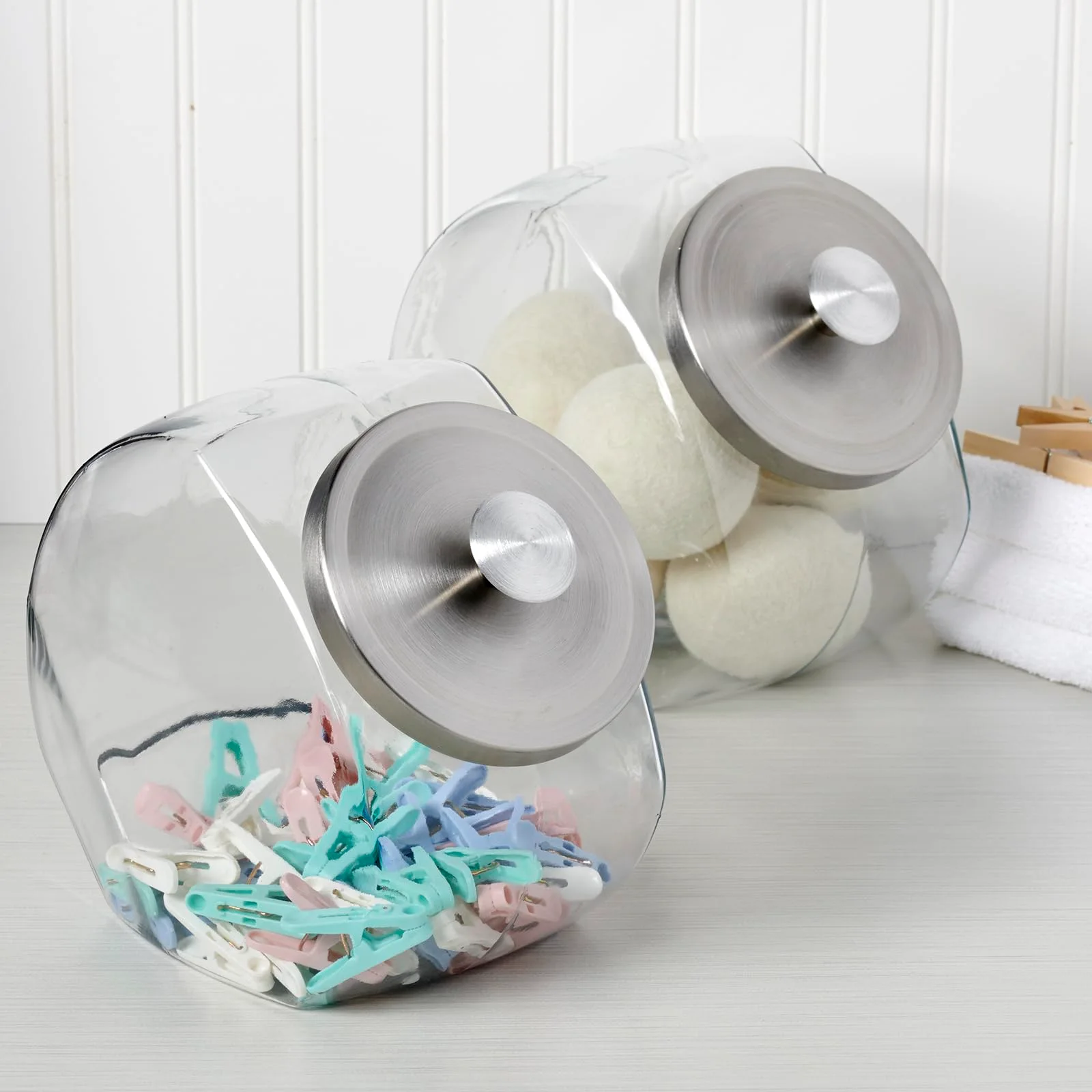
Glass is the honest jar. You see the level from across the kitchen, a tray of decorated cookies shows through the sides, and glass does not hold smells from the last batch. Most glass jars on our shelves are wide-mouth gallons with a clamp, a bamboo lid or a glass lid on a silicone ring.
The cost of glass is weight. A full gallon is a two-hand lift from a high shelf, and glass breaks if a child pulls it off the counter. Crystal, like the Waterford biscuit barrel, is heavier still and wants hand washing.
Ceramic, stoneware and porcelain: the counter piece
Ceramic hides what is inside and stays put. It is the material of almost every figural and holiday jar, because it can be shaped and hand-painted, and the weight that makes it awkward to carry keeps it steady on the counter. Some ceramic jars seal with a rubber ring. Many have a lid that rests on the rim.
A new jar from a known maker is sold for food. An old or handmade one is a different case: the FDA warns that some glazes can leach lead into food stored in them, and it asks for care with antique, worn, chipped and irregular pieces. We wrote about that in old ceramic cookie jars and lead.
Tin and metal: the jar that travels
A tin is light, does not chip and closes tight enough to carry. It is the jar for cookie swaps and bake sales, and nesting sets fit inside one another when they are empty. Powder-coated iron jars with bamboo lids look like canisters and stand on the counter like one. Keep tins dry: wipe them rather than soak them.
Acrylic: when glass is a risk
Acrylic looks like glass and does not break. It is the right choice for a counter a child can reach, a candy table carried to a venue, or an office break room. It scratches more easily than glass, so wash it with a soft cloth.
Shape and mouth
Look at the opening before the outline. A wide mouth takes a whole hand to the bottom of the jar, which matters with large cookies and with children who will dig for the last one. A narrow neck looks elegant and suits candy, small cookies and biscotti standing on end.
Figural jars give part of their inside to the figure. A doghouse or a barrel holds a fair batch, while a jar shaped around a character often has a smaller cavity than its height suggests. Where the maker lists a capacity, the card prints it. Where it does not, compare the height and the width on the card with a jar you already own.
Size: count the batch, then measure
For a standard batch of drop cookies, a gallon is the comfortable size, with room for a hand to reach the bottom. Half a gallon suits store-bought packs and small households. The two-gallon and two-and-a-half-gallon jars are for big bakers and for candy. Before you order, measure the gap under your upper cabinets: a jar has to clear it with the lid on, and the lid has to come off.
| Material | Shows the level | Breaks if dropped | Usual lid | Usual care |
|---|---|---|---|---|
| Glass | Yes | Yes | Clamp, bamboo or glass with a ring | Often dishwasher safe, see the card |
| Ceramic and porcelain | No | Yes | Resting lid or rubber ring | Usually hand wash |
| Tin and metal | No | No, it dents | Fitted lid or bamboo with a ring | Wipe clean, keep dry |
| Acrylic | Yes | No | Push-on or latch lid | Hand wash or top rack, by the label |
Care: read the card before you fall for the glaze
Care is the part people skip and regret. Many glass and acrylic jars go in the dishwasher, often top rack only. Most hand-painted ceramic, crystal and painted tins ask for hand washing, and some figural jars warn against soaking because water gets into the seams of the figure. A jar you will wash every week should be one the dishwasher can take.
Rings and gaskets need the most care. Pull the ring out to wash it, let it dry fully, and seat it back evenly, or the lid will not seal however tight it feels. Every card on our shelves repeats the care line its maker gives.
The lid decides freshness
If cookies stay in the jar longer than a day, choose a lid that seals: a silicone or rubber ring, or a clamp pressing a gasket. A resting lid looks the same and keeps nothing out. Every card on Cookie Jar says which lid the maker lists, and our article on keeping cookies fresh explains why it matters.
A cookie jar as a gift
A jar makes a good gift because it keeps being used. A holiday jar is a present for the season and comes out of the box each December. A set of glass or acrylic jars suits someone who bakes and stores flour and sugar too. A tin filled with your own cookies is a gift twice over, and it comes back to you empty.
Treat jars and candy jars
Not every jar on the counter holds cookies. A dog treat jar keeps the biscuits for the dog out of the cookie jar, and a lid with a bone or a paw print tells everyone in the house which is which. Candy jars run taller and narrower, often in sets, and look best on a party table where everything inside them is wrapped.
The jar for the person
For a baker, a sealing gallon jar. For a collector, a figural jar from a maker they already own. For a family with small children, acrylic. For a dog owner, a treat jar of its own, so the biscuits stop ending up in the cookie jar. Every one of them sits somewhere in everything at Cookie Jar, on the shelf of its material.
