

Collecting
Old ceramic cookie jars and lead: what the FDA says
Vintage cookie jars are some of the most collected kitchen objects in America. Before you fill one with cookies, here is what the FDA says about the glazes on old and handmade pottery.
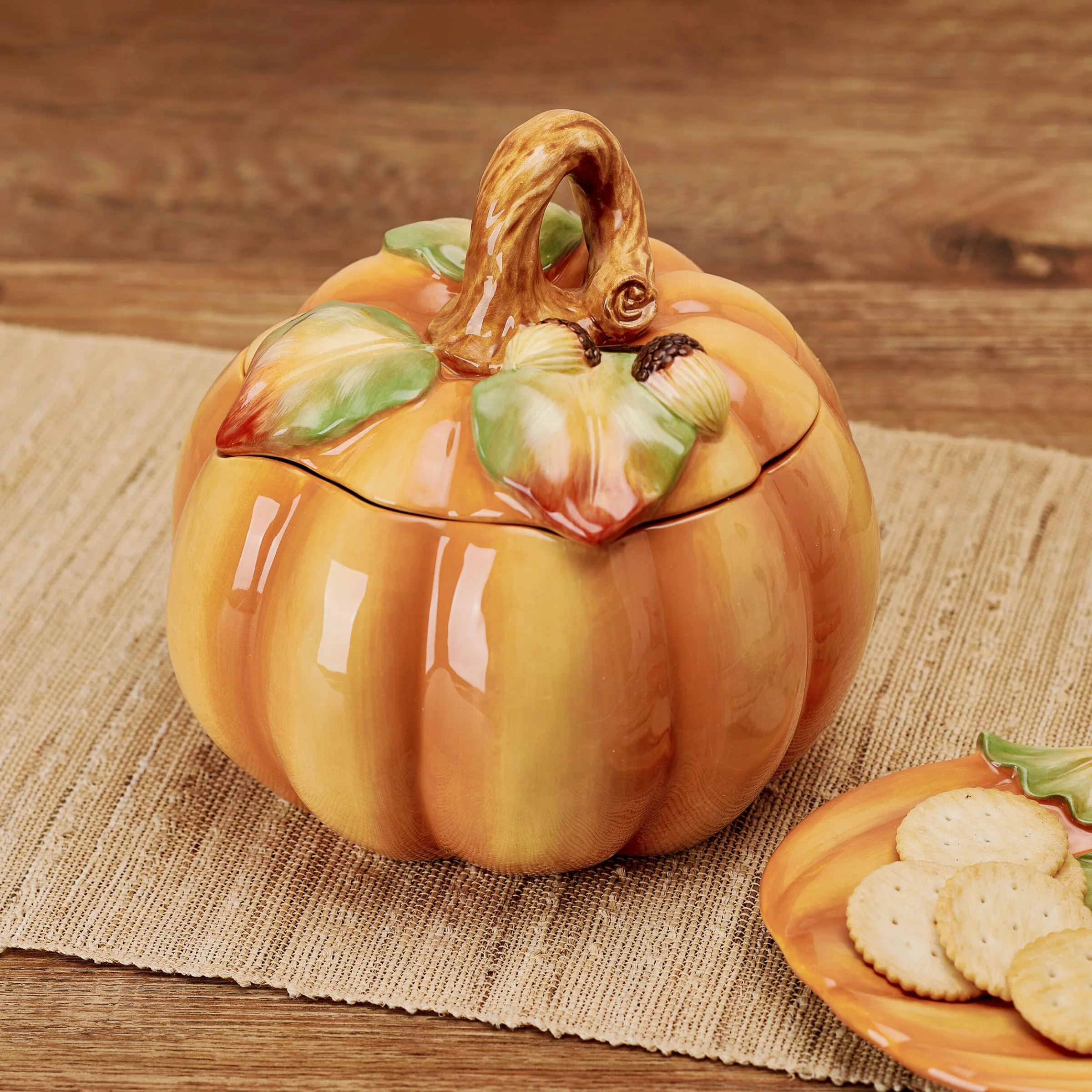
Cookie jars have been collected for as long as they have been made, and flea markets, estate sales and thrift shops are full of them: smiling bears, cottages, clowns, chefs and fruit, many of them from decades ago. They are lovely on a shelf. Whether they should hold food is a separate question, and the answer depends on the glaze.
Where the lead comes from
The FDA explains that pottery glazes may contain lead, which helps the glaze particles melt when the piece is fired. A piece that is made and fired properly holds the lead in the glaze. One that is not can let lead leach into food or drink stored in it. The FDA also notes that pottery labeled lead free has been found with lead, when old kilns that once fired lead glazes left residues behind.
Washing does not help. In the FDA's words, no amount of washing, boiling or other process removes lead from pottery.
Which jars to be careful with
The FDA lists the kinds of pottery that deserve the most caution:
- pieces that are handmade, with a crude appearance or an irregular shape
- antique pieces
- pieces that are damaged, chipped or worn
- pieces bought from flea markets or street vendors, or where you cannot tell whether the maker is reliable
- pieces brightly decorated in orange, red or yellow
That describes a good part of any vintage cookie jar collection. If a jar falls into one of those groups and you do not know its history, the FDA's advice is to consider not using it for cooking, serving or storing food.
| The jar on your shelf | Where it stands in the FDA guidance | What to keep in it |
|---|---|---|
| Handmade, crude or irregular | On the list of pieces to be careful with | Wrapped candy, or cookies in a sealed bag |
| Antique, history unknown | On the same list | Display, or a lined jar |
| Chipped or worn glaze | Damaged pieces are on the list | Display only |
| Bright orange, red or yellow, maker unknown | Bright decoration is on the list | Wrapped treats only |
| Base marked "Not for food use" | Decorative ceramicware that looks fit for food must carry that mark | Nothing to eat |
Decoration only: read the base
Some ceramic pieces are made for display and are not meant to hold food at all. FDA guidance says that decorative ceramicware that looks fit for food has to carry a permanent statement on the base that it is not for food use, along with a label on the outside. A souvenir jar or a figurine-style piece with that line on the bottom is a decoration, however much it looks like a cookie jar.
The same guidance says that pottery with extractable lead should not be labeled lead free. A lead free sticker on an unknown piece is not proof by itself.
New, but handmade
The list is not only about old jars. A jar thrown by a potter at a craft fair can be new and still handmade, with a glaze mixed in a small studio. If you buy one to hold cookies, ask the potter whether the glaze was made for food use, and keep the answer with the jar. A potter who glazes for the table will know what you mean.
A new jar from a maker that sells kitchenware in the United States is a different case again: it is made to be filled, and its care card tells you how to wash it.
Read the base before the paint
Turn an old jar over before you think about what it will hold. The base often carries a maker's mark, a mold number or a country of origin, and those are the starting points for finding out when and where it was made. A jar with no mark at all, a hand-scratched signature or a base you cannot read is a jar with no history, and the FDA list treats a piece of unknown origin with caution.
Look at the glaze at the same time. Chips, worn patches and a dull band where the lid has rubbed the rim for decades are the damage the FDA names. They are also the places where the glaze is thinnest and food touches it most often.
Cleaning and keeping an old jar
Wash an old jar by hand in warm water with a mild soap and a soft cloth. A dishwasher and harsh scouring wear a glaze faster, and the FDA notes that washing or boiling does not remove lead from a glaze in any case, so there is nothing to gain from scrubbing hard. Dry it fully before the lid goes back on.
On display, an old jar is happiest away from the sink and the stove, where it will not be knocked or splashed. Many collectors keep wrapped candy, tea bags or kitchen string in theirs, which uses the jar every day without asking the glaze to touch food.
A good arrangement for a collector is a pair: the old jar on the open shelf where it can be seen, and a new jar with a sealing lid on the counter below it for the cookies you actually eat. The old one stays a piece of the kitchen's history, and nobody has to think about its glaze at snack time.
How to enjoy an old jar
The FDA notes that lead test kits are sold in hardware stores and online, with swabs that change color when lead leaches onto them. A kit tells you more than a guess. Until then, an old jar can hold what never touches its glaze: wrapped candy, tea bags in their paper, a cookie bag folded over inside it.
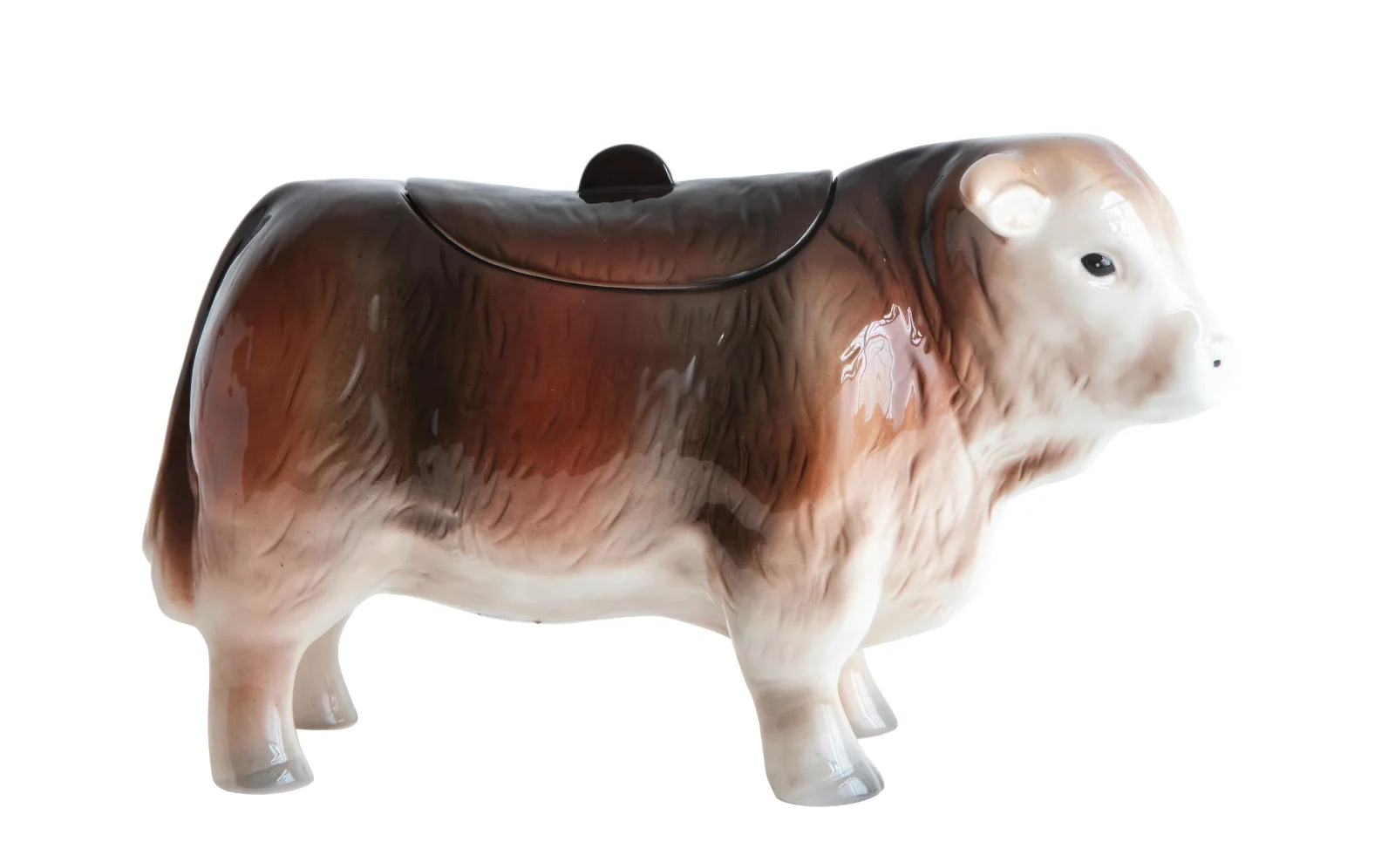
If you love the look and want to fill the jar with cookies, a new jar made in an old shape gives you both. Our vintage-style cookie jars are new jars sold for food: farmhouse crocks, penny candy glass, a door-knob lid and a cow that could have stood in a 1950s kitchen.
And if your old jar has to keep the cookies, line it. A sealed bag inside an old jar keeps the batch fresh and keeps it off the glaze, which is the whole point. Every jar we carry lists its maker and its care line, so you know what you are filling. All of them are part of the Cookie Jar selection.
