

Keeping cookies
How to keep cookies fresh in a cookie jar
A cookie jar is only as good as its lid and what you put in it together. Here is what keeps a batch soft, or crisp, until the jar is empty.
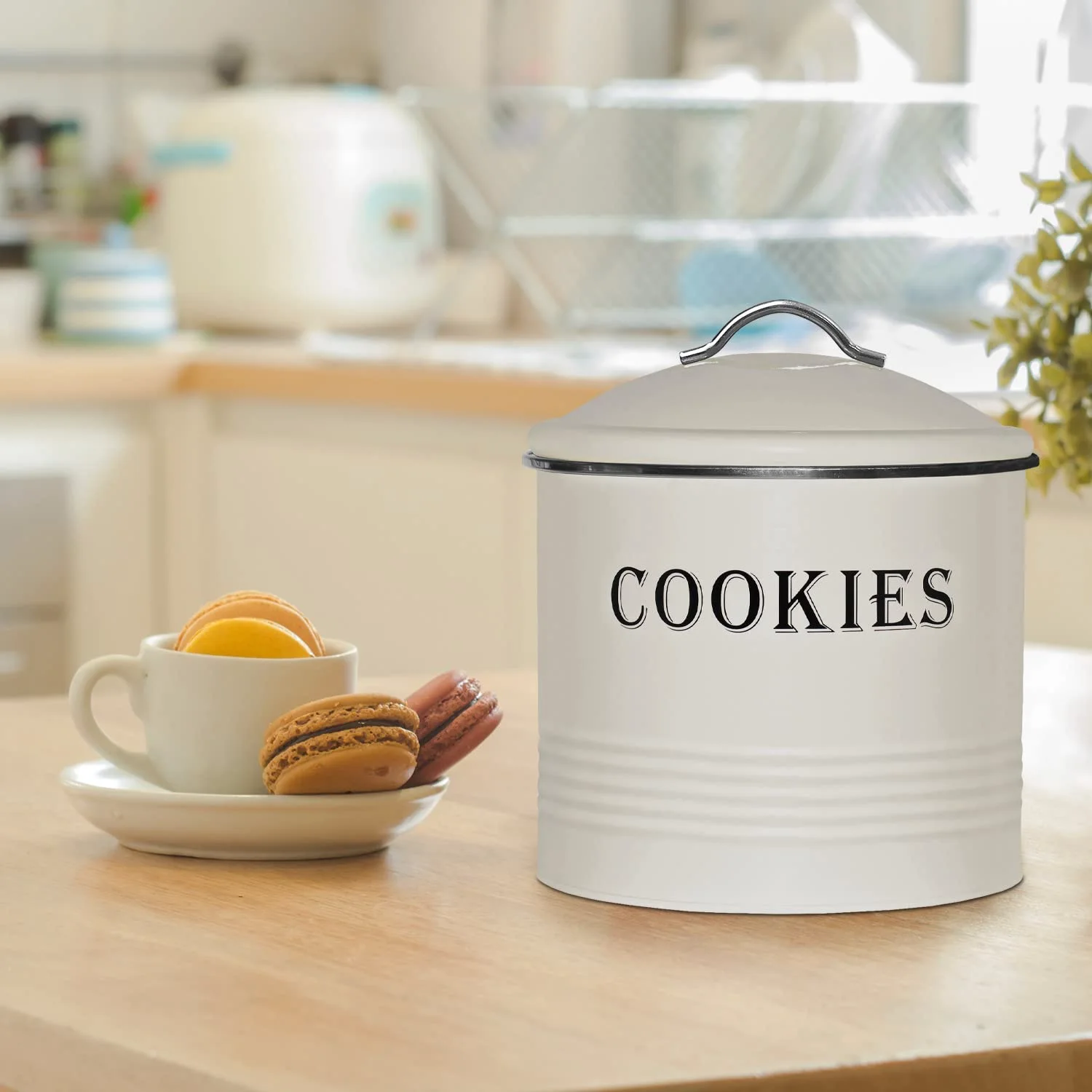
Every baker has opened a jar on day three and found the chocolate chip cookies hard and the gingersnaps bendy. Nothing went wrong with the recipe. The cookies did what sugar makes them do: they traded moisture with the air around them, and with each other.
The Exploratorium in San Francisco explains it in its Science of Cooking pages. Sugar is hygroscopic, which means it pulls water from the air. A soft cookie holds moisture inside and loses it to dry air. A crisp cookie has little moisture and soaks it up from humid air. Put the two in one jar and each moves toward the other until both are wrong.
Keep soft and crisp cookies apart
This is the rule that fixes most stale jars. Soft cookies (chocolate chip, oatmeal, snickerdoodles, anything chewy) go in one jar. Crisp ones (shortbread, gingersnaps, biscotti, thin sugar cookies) go in another. If you only have one jar, give it to whichever batch you will finish last and keep the other in a sealed bag.
A set of jars makes this easy. Two or three matching glass or acrylic jars sit side by side on a counter and look like one piece, and nobody mixes the batches by accident.
Choose a lid that seals
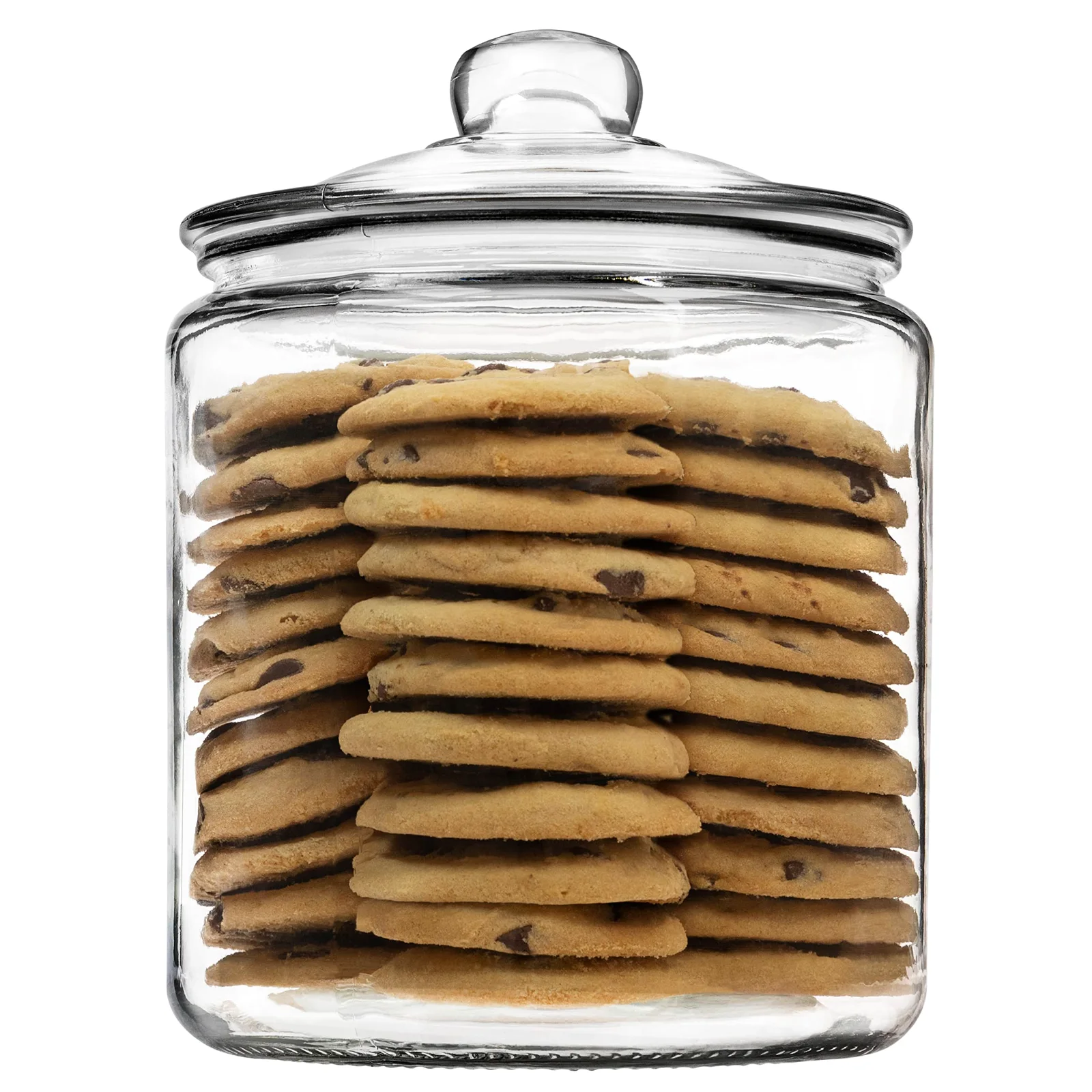
The jar itself barely matters for freshness. The lid decides. A lid with a silicone or rubber ring, a gasket pressed down by a clamp, or a ceramic lid lined with rubber closes the jar against the air. A lid that simply rests on the rim does not, however heavy it is or however snugly it seems to sit.
Most glass gallon jars on our shelves close with a ring or a clamp, and so do some ceramic crocks and the iron tins with bamboo lids. Figural jars, the Santas and frogs and Snoopys, almost always have a resting lid, because the lid is part of the figure. Love them for what they are, and fill them with cookies that will be eaten today.
| Lid | How it closes | Best for |
|---|---|---|
| Silicone or rubber ring | The ring is squeezed between lid and rim | Soft cookies kept for days |
| Clamp with gasket | A wire or latch presses the gasket down | Crisp cookies in humid kitchens |
| Bamboo or wood with ring | Push-fit lid with a ring underneath | Everyday jars on an open counter |
| Resting lid | Sits on the rim by its own weight | A batch eaten the same day, wrapped candy |
Let them cool before they go in
Warm cookies give off steam. Close them in a jar too soon and the steam turns to moisture on the inside of the lid, and the cookies soften and stick. Let a batch cool fully on the rack, then fill the jar.
Layer delicate or iced cookies with a sheet of parchment or wax paper between rows, so the icing does not glue them together and the bottom row is not crushed by the top one.
Where the jar stands
Heat and sun work against a cookie jar. A glass jar in the window warms up during the day, chocolate chips soften and frosting slides. A spot beside the stove or on top of the fridge is warm for the same reason. Pick a counter in the shade, away from the oven.
The refrigerator is not the answer either. The Exploratorium notes that it is where most cookies go stale fastest. Keep the fridge for cookies with soft fillings. If a batch has to last longer than a jar can keep it, freeze it, which keeps cookies close to how they came out of the oven, and fill the jar a few at a time.
A half-empty jar
A jar that was full on Sunday is half air by Wednesday, and the cookies left in it share all of that air. Every time the lid comes off, the air inside is swapped for kitchen air, wet or dry. A full jar opened ten times a day keeps better than you would think, and the last dozen in a big jar keep worse.
So move the tail of a batch down a size. A smaller jar, a tin or a sealed bag holds the last few cookies close, and the big jar gets washed and is ready for the next bake. That is one more reason a set of jars in two sizes earns its counter space.
Iced, filled and decorated cookies
Royal icing and glazes need to set before anything touches them. Leave decorated cookies on the rack until the icing is hard all the way through, usually overnight for a thick flood, then stack them with parchment between layers. A jar with a wide mouth lets you lift the top layer off without reaching through it.
Cookies with a soft filling, cream cheese frosting or fresh fruit are another matter. They do not belong in a jar on the counter at all, which is the one case where the Exploratorium points to the refrigerator. Keep the cookie jar for the dry and the chewy, and the fridge for the rest.
Cookies for a trip or a gift
A tin is the jar that travels. It is light, it does not chip in the car, and its lid fits tight enough to hold a batch steady. Line it with parchment, pack the cookies flat in rows with a sheet between layers, and fill the gaps with crumpled paper so nothing slides. Keep crisp and soft cookies in separate tins for the same reason you keep them in separate jars.
Clean the jar between batches
Crumbs and butter collect at the bottom of a jar and turn the next batch stale faster. Wash the jar and its ring between batches, as the maker's care line says, and let both dry completely before the lid goes back on. A ring put back damp holds moisture against the rim, which is the one thing the jar is supposed to keep out.
If you are still choosing a jar, our guide on how to choose a cookie jar goes through materials and sizes, and the airtight cookie jars page gathers every jar on our shelves whose maker lists a sealing lid. All of them are part of the jars at Cookie Jar.
